
Did you know regular car maintenance can cut accident risks by up to 40%? Keeping your car in good shape is key for your safety and your vehicle’s life span.
We know how vital it is to keep your vehicle in top condition. This avoids expensive repairs and boosts its performance. Here, we share essential car maintenance tips to ensure your car runs smoothly.
Key Takeaways
- Regular oil changes can improve engine performance.
- Proper tire pressure can enhance fuel efficiency.
- Brake pad replacement is critical for safety.
- Regular inspections can spot issues early.
- Battery maintenance is key to avoid breakdowns.
Understanding the Importance of Vehicle Maintenance
Keeping your vehicle in good shape is key for its performance and life span. A regular maintenance schedule helps spot problems early. This way, your car stays efficient and safe to drive.
Benefits of Regular Maintenance
Regular care brings many perks, like improved fuel efficiency, enhanced performance, and increased safety. A well-maintained car offers a smoother ride and better handling. It also lowers the risk of accidents due to faulty parts.
- Improved fuel efficiency saves you money on gas.
- Enhanced performance ensures your vehicle responds well to your driving needs.
- Increased safety protects you and your passengers from possible dangers on the road.
Cost Savings Over Time
Regular maintenance also leads to cost savings over time. Fixing small problems early can prevent big, expensive repairs. This way, you extend the life of your car’s parts.
For example, regular oil changes prevent engine damage. Replacing brake pads on time avoids costly repairs to other brake parts. Regular maintenance saves you money and ensures a more dependable ride.
Creating a Maintenance Schedule
A well-planned maintenance schedule is key to keeping your vehicle running long. By sticking to a routine, you can spot problems early. This keeps your vehicle reliable and efficient.
Monthly Checks to Consider
Monthly checks on important parts are vital. We suggest looking at:
- Tire pressure: Right inflation boosts fuel efficiency and handling.
- Oil levels: Regular checks prevent engine damage.
- Brakes: Check brake pads and rotors for wear.
- Battery condition: A charged battery and clean terminals prevent failures.
These monthly checks help you stay ahead of your vehicle’s needs. They also prevent expensive repairs later.
Seasonal Maintenance Tasks
Seasonal tasks are also important. They prepare your vehicle for weather changes. For instance:
- Winterizing your vehicle: Check antifreeze, battery, and tires for cold weather.
- Preparing for summer: Inspect cooling system, air conditioning, and tires for heat.
By following these best vehicle maintenance practices, your vehicle stays in great shape all year.
Creating a maintenance schedule might seem hard, but it’s doable. With these tips, you can make a routine that fits you and your vehicle. Regular maintenance is essential for a long vehicle life and avoiding expensive fixes.
Checking and Changing Engine Oil
Engine oil is vital for your car, keeping it running smoothly. It lubricates, prevents corrosion, and cools the engine. As it gets dirty, it loses its power, so regular checks and changes are key.
Signs You Need an Oil Change
Knowing when to change your oil can prevent engine damage. Look out for these signs:
- Dark or Dirty Oil: If your dipstick oil looks dark or dirty, it’s time for a change.
- Low Oil Level: A low oil level might mean a leak or that your car is burning oil.
- Unusual Engine Noises: Grinding or knocking sounds mean your oil is dirty or low.
- Warning Lights: Modern cars have lights that tell you when to change the oil.
Choosing the Right Oil for Your Vehicle
Picking the right oil is essential for your car’s performance and life. Here’s how to choose:
- Check Your Owner’s Manual: Your owner’s manual will tell you the best oil for your car.
- Consider Your Climate: Thicker oils are good for hot climates, while thinner oils are better for cold.
- Synthetic vs. Conventional: Synthetic oil is better in extreme temperatures but costs more. Conventional oil works well for most driving.
Understanding engine oil and how to care for it ensures your car runs well. Regular oil changes are a simple way to keep your car in top shape.
Monitoring Tire Health

Keeping an eye on your tires is key for a safe and smooth drive. We’ll show you how to keep your vehicle’s tires in top shape. This includes the right tire pressure and when to rotate them.
Importance of Tire Pressure
Right tire pressure is essential for your car’s performance and safety. If your tires are underinflated, they can use more fuel and wear out faster. Always check your tire pressure monthly and before long drives.
- Incorrect tire pressure can cause uneven tire wear.
- Correct tire pressure boosts fuel efficiency.
- Properly inflated tires make your car handle better and safer.
When to Rotate Tires
Tire rotation is a must to keep your tires even. We advise rotating your tires every 5,000 to 8,000 miles, based on your car’s needs. Regular rotation can make your tires last longer and improve your car’s performance.
- Look in your car’s manual for the best time to rotate tires.
- Rotate tires in the recommended pattern for even wear.
- Check for uneven wear or damage when rotating.
Inspecting the Battery
Regularly checking your vehicle’s battery is key to keeping it running well. A good battery is essential for starting your car and powering its electrical systems. We’ll show you how to spot a failing battery and share tips to make it last longer.
Signs of a Failing Battery
Spotting a failing battery early can save you from being stuck. Look out for these signs:
- Slow Engine Crank: If your engine takes a long time to start, your battery might be weak.
- Dim Headlights: If your headlights are dim or flicker, it could mean your battery is not charging right.
- Swollen Battery Case: A bulging battery case often means it’s overheating, which shortens its life.
- Corrosion on Terminals: Corrosion on the terminals can block electrical flow, causing starting problems.
Tips for Extending Battery Life
To make your battery last longer, follow these maintenance tips:
- Regularly Check the Battery Terminals: Keep the terminals clean and corrosion-free. Use baking soda and water to clean off corrosion.
- Secure the Battery: Ensure the battery is tightly held in its tray to avoid damage from shaking.
- Avoid Short Trips: Short trips can wear out your battery, as it doesn’t get enough time to recharge.
- Turn Off Accessories: Always switch off headlights, interior lights, and other accessories when the engine is off to save battery life.
By following these tips and watching for signs of a failing battery, you can extend your battery’s life. This helps avoid unexpected breakdowns.
Brake Maintenance Essentials
Keeping your brakes in good shape is key to avoiding accidents and expensive fixes. We’ll show you how to take care of your vehicle’s brakes. This will keep you safe on the road.
When to Replace Brake Pads
Knowing when to swap out your brake pads is a big part of brake care. Look out for these signs:
- Squealing or grinding noises when applying the brakes
- Vibrations or pulsations when braking
- A noticeable decrease in braking performance
If you notice any of these, it’s time to check and possibly replace your brake pads.
Importance of Brake Fluid Checks
Brake fluid is essential for your car’s brakes. Regular checks can spot problems early. Here’s what to keep in mind:
- Check the brake fluid level regularly to ensure it’s at the recommended level.
- Look for signs of contamination or degradation in the brake fluid.
- Have your brake fluid changed according to your vehicle’s maintenance schedule.
By keeping your brake fluid in check and replacing brake pads when needed, your brakes will work well and safely.
Regular brake maintenance boosts your vehicle’s safety and performance. It also helps it last longer.
Cooling System Care
A well-maintained cooling system is key to your vehicle’s engine health. It keeps the engine temperature in check. Without it, your engine could suffer serious damage.
Checking Coolant Levels
Checking the coolant level is a simple yet vital task. We suggest doing this at least once a month and before long drives. Make sure your engine is cool first. Then, find the coolant reservoir, a clear plastic tank with lines.
The level should be between “MIN” and “MAX”. If it’s low, add the right coolant for your car.
Tips for Checking Coolant:
- Always check your car’s manual for the right coolant.
- Never open the radiator cap when it’s hot.
- Look for leaks around the reservoir and hoses.
Signs Your Cooling System Needs Attention
Knowing when your cooling system needs help can save you money. Look out for these signs:
- Overheating engine: If your temperature gauge is always high or your dashboard lights up.
- Coolant leaks: Green or yellow fluid under your car or near the engine.
- Unusual smells: A sweet, syrupy smell means you might have a leak.
By keeping up with cooling system care, you can dodge expensive engine fixes. Regular checks and quick fixes are essential for your car’s health.
Wiper Blades and Visibility
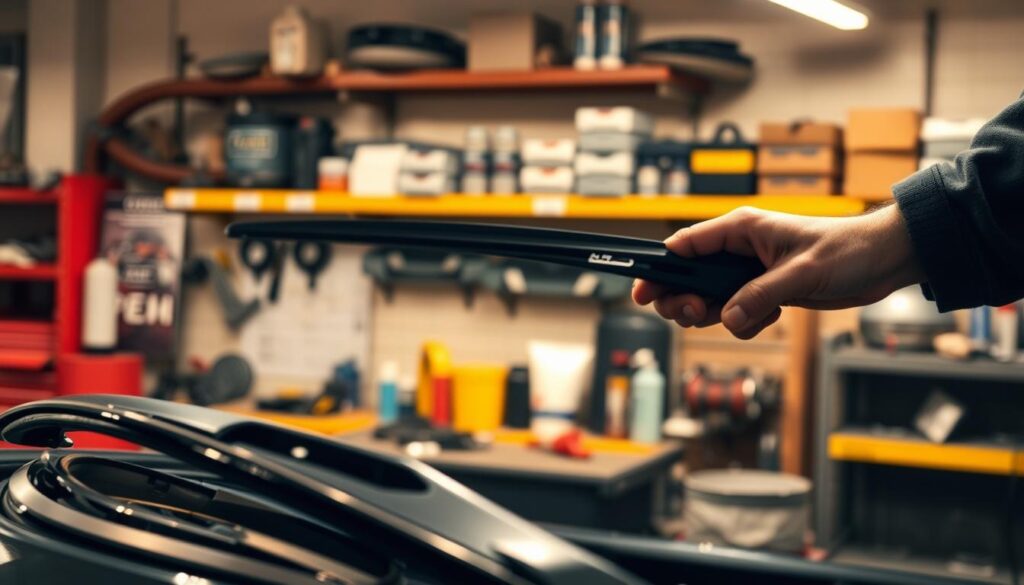
Clear visibility while driving is key, and wiper blades are vital for this. We’ll look at how wiper blades help keep you safe, even in bad weather.
When to Replace Wiper Blades
Wiper blades don’t last forever. They can wear out, causing streaks and reducing your view. It’s time to replace them when you see:
- Streaks or smudges on the windshield
- Noise or chattering when the wipers are in use
- Visible cracks or damage to the blades
Wiper blades usually need to be changed every six to twelve months. This depends on how much you use them and the weather.
Importance of Proper Windshield Care
Keeping your windshield clean is linked to your wiper blades’ condition. A clean windshield and good wiper blades ensure you can see clearly. Clean your windshield often and check your wiper blades for damage.
Tips for Effective Windshield Care:
- Use a high-quality windshield cleaner
- Avoid using paper towels, which can leave behind lint and scratches
- Regularly inspect and replace wiper blades as needed
By following these vehicle maintenance tips and keeping an eye on your wiper blades, you can greatly improve your safety on the road. Clear visibility is essential for driving safely in all weather, making it a critical part of automotive maintenance suggestions.
Fluid Checks and Changes
Fluid checks and changes are key to keeping your vehicle in top shape. They help prevent damage and breakdowns. They also ensure your car runs smoothly.
Essential Fluids to Monitor
Your car needs several important fluids to run well. These include:
- Engine Oil: Keeps engine parts moving smoothly and prevents overheating.
- Coolant: Keeps the engine cool, stopping overheating and damage.
- Brake Fluid: Helps your car stop safely by transferring pressure to the brakes.
- Transmission Fluid: Makes shifting gears smooth and prevents wear on the transmission.
- Power Steering Fluid: Makes steering easier by lubricating the power steering system.
Each fluid is vital for your car’s operation. Ignoring any can cause serious problems.
How to Check Fluid Levels Safely
Checking your car’s fluid levels is easy to do at home. Here’s how to do it safely:
- Ensure Your Vehicle is Parked on a Level Surface: This gives accurate readings.
- Turn Off the Engine and Let it Cool: Checking fluids when hot can be dangerous and give wrong readings.
- Locate the Fluid Reservoirs: Your owner’s manual will show where each reservoir is under the hood.
- Check the Levels: Use dipsticks or level indicators to see if levels are right.
- Inspect the Fluids: Look for any signs of contamination or wear, like color changes or particles.
By following these steps, you can keep your car’s fluids at the right levels. This helps your car stay healthy.
Regular fluid checks and changes are a simple way to keep your car running well. Knowing how to check these fluids is a big part of car care.
Understanding Warning Lights on the Dashboard
The dashboard warning lights in your vehicle are like an early warning system. They alert you to problems that need attention. These lights can show anything from small issues to serious problems that need quick action. Knowing what these lights mean helps you take the right steps to keep your vehicle in top shape.
Common Dashboard Warning Lights
There are several dashboard warning lights you should know about to keep your vehicle running well. Some of the most common include:
- Check Engine Light: This light means there’s a problem with your engine or emissions system. It could be something simple like a loose gas cap or a serious issue like a bad catalytic converter.
- Oil Pressure Light: This light shows your engine’s oil pressure is too low. If not fixed quickly, it can cause a lot of damage.
- Battery Light: If this light comes on, it might mean there’s a problem with your vehicle’s charging system. This could be a failing battery or alternator.
When any of these lights come on, it’s important to check your vehicle’s manual. This will help you understand what they mean and what to do next.
When to Seek Professional Help
While some warning lights might just mean a small issue, others can signal serious problems that need a pro’s help. If you’re not sure about a light or how to fix the problem, it’s best to talk to a trusted mechanic. They can figure out the problem and fix it, getting your vehicle back in shape.
By knowing about your vehicle’s warning lights and acting fast when they come on, you can avoid big problems. This keeps your vehicle healthy and running smoothly.
Importance of Regular Inspections
Keeping your vehicle in great shape means regular checks for any issues. These inspections help spot problems early, saving you from big repairs later. They make sure your car runs well and safely.
Regular inspections are key: They find parts that need replacing and catch problems early. This boosts your car’s performance and keeps you safe on the road.
Finding a Trusted Mechanic
Finding a good mechanic is vital for regular checks. A reliable mechanic has the skills and tools to check your car well. Here’s how to find one:
- Ask friends, family, or look online for recommendations.
- Look for certifications from known organizations.
- Make sure they know your car’s make and model.
What to Expect During an Inspection
Your mechanic will check many parts of your car during an inspection. They look for wear and tear, and make sure everything works right.
They’ll check things like:
- Engine oil condition and level.
- Tire state, including tread and pressure.
- Brake pads and discs for wear.
- Battery and charging system.
Knowing what happens during an inspection helps you prepare. Regular checks and the right care keep your car running well for longer.
Preparing for Seasonal Changes
As the seasons change, so do the demands on your vehicle. We help you prepare your car for the challenges of winter and summer with essential vehicle maintenance tips.
Seasonal Maintenance Needs
Different seasons require different car care advice. In winter, check your vehicle’s battery, antifreeze, and tire tread depth. This ensures your car starts and runs smoothly in cold weather.
In summer, focus on your coolant levels, tire pressure, and air conditioning system. This keeps your vehicle cool and running efficiently.
Emergency Kits for Extreme Weather
Assembling an emergency kit for your vehicle can be a lifesaver during extreme weather conditions. Include items like a first-aid kit, flashlight, jumper cables, and a blanket.
For winter, add warm clothing, ice scrapers, and cat litter for traction. For summer, consider a sunshade, sunscreen, and plenty of water.
By following these vehicle maintenance tips and car care advice, you can ensure your vehicle is ready for whatever the seasons bring. This keeps you safe on the road.